EZSMART Corporation, ESA/ECRA #7012690 , North York , Ontario
Mon-Fri 08:00 AM - 05:00 PM
Home / Blog Posts / Why Does My Breaker Keep Tripping?
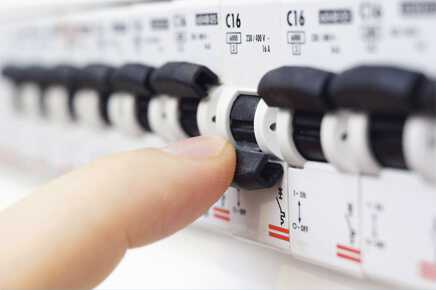
A breaker that trips once in a while is usually nothing to worry about — it’s doing exactly what it’s designed to do, which is shutting off power before something goes wrong. But a breaker that trips repeatedly, especially the same one, is a pattern worth paying attention to. It means something in that circuit is consistently asking for more than it can safely handle, or something in the circuit itself has developed a fault.
Here’s what’s actually happening when a breaker trips, the most common causes, and how to know when it’s time to call a licensed electrician — from the team at EZSMART, serving Toronto and the GTA.
A circuit breaker is a safety device. Its entire job is to cut power to a circuit the moment it detects more current flowing than the wiring is rated to handle safely. Every time it trips, it’s preventing overheating, which is the root cause of most electrical fires. So a tripped breaker isn’t a malfunction — it’s a warning system doing its job. The real question is why it keeps needing to do that job.
1. Circuit overload
This is the most common cause. If you’re running multiple high-draw appliances on the same circuit — a microwave, toaster, and kettle in a kitchen, for example — the total current draw can exceed what the circuit is rated for, tripping the breaker. This is especially common in older homes where kitchens and bathrooms weren’t originally wired for the number of appliances people use today.
2. Short circuit
A short circuit happens when a “hot” wire touches a neutral or ground wire, creating a sudden surge of current. This can happen due to damaged wiring, a faulty appliance, or a loose connection inside an outlet or switch. Short circuits usually cause the breaker to trip immediately and repeatedly, often the moment you plug something in or turn something on.
3. Ground fault
Similar to a short circuit, a ground fault occurs when current escapes its intended path and flows through a ground wire or another unintended route — often because of moisture, a damaged appliance cord, or deteriorated wiring insulation. GFCI-protected circuits (kitchens, bathrooms, outdoor outlets) are designed to catch this quickly, which is why they trip more often in areas exposed to moisture.
4. A faulty appliance
Sometimes the issue isn’t your home’s wiring at all — it’s a specific appliance with an internal short or worn-out motor drawing too much current. Unplugging the appliance and seeing if the breaker stops tripping is a quick way to test this.
5. An aging or failing breaker
Breakers themselves have a lifespan. After enough trip cycles or simply enough years of service, a breaker can become overly sensitive (tripping too easily) or, more dangerously, fail to trip when it should. If your panel is older or hasn’t been inspected in years, a worn breaker could be part of the issue.
6. Loose wiring connections
A loose connection at the breaker itself, or anywhere along the circuit, can cause arcing and heat buildup that trips the breaker intermittently, sometimes without any obvious pattern.
A few simple observations can help narrow things down before an electrician even arrives:
Some situations call for a professional right away, not a wait-and-see approach:
Repeatedly resetting a breaker that keeps tripping — rather than having it diagnosed — is one of the more common mistakes homeowners make. Each trip is a signal, and ignoring that signal doesn’t fix the underlying issue; it just delays finding out what it is.
A licensed electrician will typically test the circuit with a multimeter, check for signs of arcing or heat damage at the breaker and outlets, inspect connections for looseness, and determine whether the issue is overload, a fault in the wiring, or a failing breaker. In many cases, the fix is straightforward — replacing a worn breaker, redistributing loads across circuits, or tightening a connection. In others, it may point to a larger issue, like an aging panel that’s due for an upgrade. Electrical work and panel modifications in Ontario should be performed by a licensed contractor and, where required, inspected under Electrical Safety Authority standards.
An occasional trip is normal. A breaker that trips repeatedly is your electrical system telling you something needs attention, whether that’s a simple case of too many appliances on one circuit or a wiring fault that’s developed over time. Either way, it’s worth having it looked at rather than resetting it and hoping it stops on its own.
Is it bad if my breaker trips a lot?
Yes, if it’s happening repeatedly or with a consistent pattern. Occasional trips during heavy appliance use can be normal, but frequent or unexplained trips point to an underlying issue that should be checked.
Can a tripping breaker cause a fire?
The breaker itself is a safety device preventing fire by cutting power. The risk comes from ignoring the underlying cause — a loose connection, short circuit, or overloaded wiring — which can generate heat even when the breaker is functioning correctly.
Why does my breaker trip only when I use one specific appliance?
This usually points to either an overloaded circuit or a fault in that specific appliance. Try the appliance on a different circuit; if it still trips, the appliance itself is likely the cause.
Can I fix a tripping breaker myself?
Resetting a breaker is safe to do once. If it trips again immediately or repeatedly, the cause needs to be diagnosed by a licensed electrician rather than reset repeatedly, since the underlying issue could involve damaged wiring.
How much does it cost to fix a breaker that keeps tripping?
Cost depends on the cause — replacing a single breaker is a relatively small repair, while tracing a wiring fault or redistributing circuit loads can cost more. A licensed electrician can diagnose the issue and provide a quote before starting any work.
If a breaker in your home keeps tripping, don’t just keep resetting it. EZSMART provides licensed electrical diagnostics and repairs across Toronto and the GTA. Call 416-838-9006 to get it checked out.
EXCELLENTTrustindex verifies that the original source of the review is Google. I upgraded electrical pannel to 200 Amp. And Amir did a good job and fast. I recomend.Posted on GoogleTrustindex verifies that the original source of the review is Google. "I cannot recommend Amir enough. We hired him to upgrade our electrical panel to 200-amps. From the moment he arrived, he was professional, punctual, and highly communicative. Amir took the time to explain the process, answered all my questions. If you need an electrician who is honest, skilled, and respects your home, look no further. We will definitely be using Amir for all of our future electrical needs.Posted on GoogleTrustindex verifies that the original source of the review is Google. I Highly recommend Amir . Him and His work is exceptional and his quote was far better than the other companies that quoted for upgrading my 100 amp panel to 200 amps. 5 stars is not enough.Posted on GoogleTrustindex verifies that the original source of the review is Google. Not recommend!!! Overall the work felt very Jimmy Rigged and rushed like Mickey Mouse job rather them professional electrical work. The lack of preparation, lack of proper tools and poor communication made the whole experience frustrating Never again!! Homeowners be cautious!!Posted on GoogleTrustindex verifies that the original source of the review is Google. Shawn and Amier provided an excellent service, both where extremely helpful in assisting with extra services that was required for my repairs and upgrade, any one living in the Vaughan area should consider using them for any electrical work to there home or property.Posted on GoogleTrustindex verifies that the original source of the review is Google. Awesome jobe done by AmirPosted on GoogleTrustindex verifies that the original source of the review is Google. Outstanding Electrician – Highly Recommend Amir at EZSMART CORPORATION After interviewing eleven electricians, I chose Amir from EZSMART CORPORATION to upgrade my home to 200A service and install an EV charger—and I couldn’t be happier with that decision. From our first conversation, Amir made me feel confident and at ease. He was honest, transparent, and never tried to upsell unnecessary work. Instead, he offered practical advice and even recommended the best EV charger for my vehicle. Once the job began, a few unexpected issues came up—none of which were his fault or included in the original estimate. Still, Amir resolved them without charging extra. That level of integrity is rare. Amir’s professionalism, fairness, and attention to detail truly set him apart. If you need electrical work done, I highly recommend Amir and EZSMART CORPORATION.Posted on GoogleTrustindex verifies that the original source of the review is Google. Nice and professional, strongly recommendedPosted on GoogleTrustindex verifies that the original source of the review is Google. "Fantastic work! EZSMART CO was professional, efficient, and very knowledgeable. They handled everything with care and made sure everything was up to code. Highly recommended!"Posted on GoogleTrustindex verifies that the original source of the review is Google. Professional and a clean job. Recommend highly. Amir installed an EV outlet for me.
| M | T | W | T | F | S | S |
|---|---|---|---|---|---|---|
| 1 | 2 | 3 | 4 | 5 | ||
| 6 | 7 | 8 | 9 | 10 | 11 | 12 |
| 13 | 14 | 15 | 16 | 17 | 18 | 19 |
| 20 | 21 | 22 | 23 | 24 | 25 | 26 |
| 27 | 28 | 29 | 30 | 31 | ||
Aluminum wiring is one of the more common electrical concerns homeowne
Electricity is arguably the most valuable resource we have in our mode
We use cookies to improve your experience on our site. By using our site, you consent to cookies.
Manage your cookie preferences below:
Essential cookies enable basic functions and are necessary for the proper function of the website.
These cookies are needed for adding comments on this website.
Statistics cookies collect information anonymously. This information helps us understand how visitors use our website.
Google Analytics is a powerful tool that tracks and analyzes website traffic for informed marketing decisions.
Service URL: policies.google.com (opens in a new window)
SourceBuster is used by WooCommerce for order attribution based on user source.
Marketing cookies are used to follow visitors to websites. The intention is to show ads that are relevant and engaging to the individual user.
Google Maps is a web mapping service providing satellite imagery, real-time navigation, and location-based information.
Service URL: policies.google.com (opens in a new window)